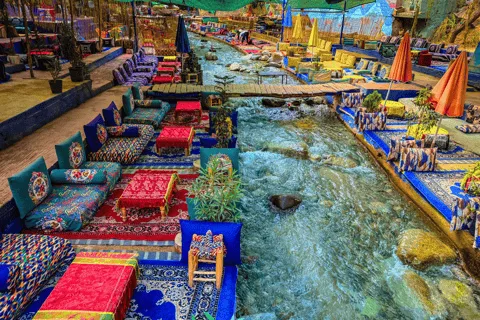
The Atlas Mountains stretch across Morocco for over 2,400 kilometres, but for visitors based in Marrakech, it is the High Atlas — particularly the valleys and villages between one and two hours from the city — that form the most practical destination for a day trip. The landscape shifts quickly from the flat plains around Marrakech to steep valleys, terraced farms, and traditional stone houses.
The most accessible Atlas destinations
Ourika Valley is the easiest entry point. It runs along a river into the heart of the mountains and includes the village of Setti Fatma with its famous series of waterfalls. For a good overview of this route, see the Ourika Valley trip page.
Imlil is the main gateway for those interested in trekking toward Jebel Toubkal, the highest peak in North Africa at 4,167 metres. Imlil itself is a small mountain village about two hours from Marrakech. It can be visited on a day trip even without serious hiking, and the surrounding valley makes for an impressive drive and walk.
Do you need to be a hiker?
No. Most Atlas day trips can be enjoyed without serious hiking experience. Village walks, river paths, and roadside viewpoints are all accessible to ordinary visitors. The steeper routes — including the approach to Toubkal — do require fitness and proper footwear, but these are optional parts of the experience.
If you want a day in the mountains without any strenuous walking, a driver and guide can take you through the valleys and stop at viewpoints, local homes, and market towns. The scenery alone makes the journey worthwhile.
What the villages are like
The Atlas villages are mostly Amazigh (Berber) communities with a way of life that has remained largely unchanged for generations. Flat-roofed homes of red and ochre clay cluster up the hillsides, and terraced fields of walnut, apple, and barley line the valley floors. Visiting with a local guide adds context to what you see and allows for more genuine interactions with residents.
Best time of year for Atlas day trips
Spring and autumn are ideal. March through May brings green valleys and wildflowers, and temperatures at altitude are comfortable for walking. September and October offer clear skies and good light. Winter brings snow to the higher elevations, which creates striking scenery but can limit access to some passes and paths.
What to wear and bring
- Sturdy shoes or light hiking footwear, especially for walking near waterfalls or on mountain paths
- Layers — altitude temperatures drop noticeably even on warm days
- Sun protection, as UV is stronger at elevation
- Cash for local mint tea stops and any small market purchases
Who this trip is best for
Atlas day trips suit a wide range of travelers. Families, couples, and solo visitors all find something in the mountains. If you want a relaxed scenic drive with a few walking stops, Ourika Valley is the most natural fit. If you want a more active day or are interested in the Toubkal region, Imlil is the better choice. For history and kasbah architecture you can also combine an Atlas trip with a visit to Aït Benhaddou if you have more time.
After the mountains
Many visitors find that a mountain day trip leaves them pleasantly tired. A hammam and massage the following morning is one of the best recovery options in Marrakech. If you want to balance your itinerary with a very different landscape, the Agafay Desert on another day makes a striking contrast.
To get help planning which Atlas route suits your schedule and fitness level, use the contact page.