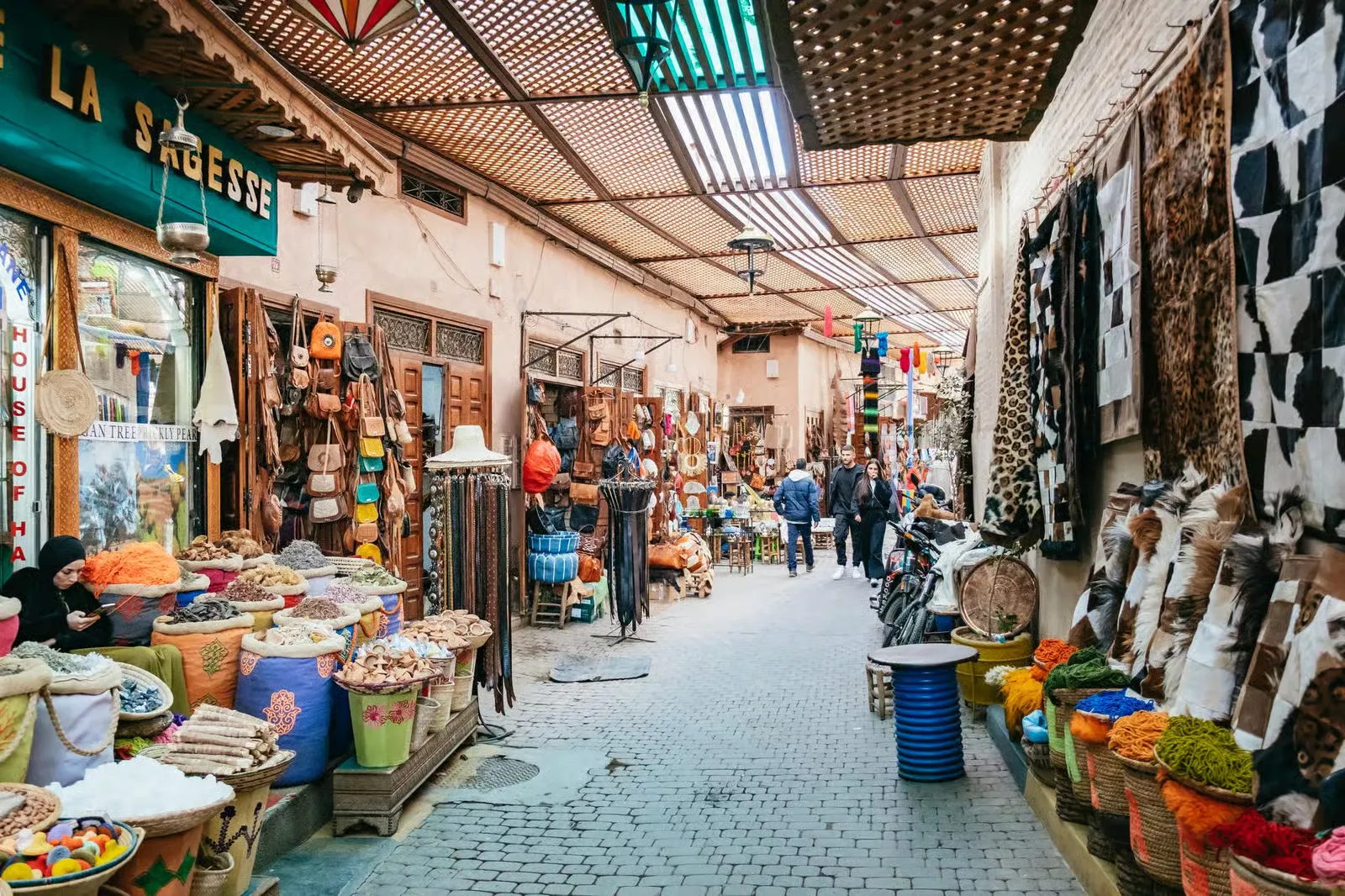
Moroccan cuisine is one of the most complex and aromatic in the world, shaped by Berber, Arab, Andalusian, and sub-Saharan African influences. Marrakech is the best place to experience it in its most vibrant form — both as fine dining in a riad and as a 20-dirham snack eaten standing at a stall.
Must-Try Street Foods
Djemaa el-Fna square transforms every evening into one of the world's great outdoor food markets. Dozens of numbered stalls compete for your attention with grilled meats, snails, sheep heads, and fresh orange juice pressed to order.
- Merguez: Spiced lamb or beef sausages grilled over charcoal — simple, smoky, and irresistible
- Msemen: Flaky pan-fried flatbread often served with argan oil and honey for breakfast
- Bissara: A warming soup of dried fava beans with cumin and olive oil, popular in winter mornings
- Sfenj: Moroccan doughnuts fried fresh and dusted with sugar — find them at medina bakeries early in the morning
- Grilled sardines: Fresh, seasoned, and served with chermoula sauce — excellent near the Mellah market
Classic Moroccan Dishes
Beyond street food, there are a handful of dishes you should make a point of eating properly. These are best ordered in a traditional restaurant or riad:
- Tagine: The slow-cooked stew that defines Moroccan home cooking — lamb with prunes and almonds, chicken with preserved lemon and olives, or vegetable versions are all excellent
- Pastilla: A flaky warqa pastry pie filled with pigeon or chicken, almonds, eggs, and spices, dusted with icing sugar and cinnamon — a Moroccan celebration dish worth seeking out
- Couscous: Traditionally eaten on Fridays, this dish of steamed semolina with vegetables and meat is best experienced as a Friday lunch in a family-style restaurant
- Harira: A hearty tomato, lentil, and chickpea soup served with dates and chebakia pastries — especially popular during Ramadan
- Mechoui: Whole slow-roasted lamb, sold by weight in the Mechoui Alley near the main square
Drinks and Sweets
No meal in Marrakech is complete without mint tea poured high from a silver pot — the theatrical pour aerates the tea and is a sign of hospitality. Fresh-squeezed orange juice from the square costs around 4 dirhams and is among the best you will ever drink.
- Mint tea (Atay): Sweet, strong, and served in small glasses — refusing it is considered impolite
- Avocado juice: Blended with milk, sugar, and almonds — a staple in medina juice bars
- Chebakia: Sesame and honey pastries fried and rose-water scented, often served alongside harira
- Argan oil: Try it drizzled on amlou (a paste of almonds, argan oil, and honey) with bread at breakfast
Where to Eat
For a guided introduction to the food, a food tour with Morocco City Trips covers the key stalls and dishes with a local host who knows how to navigate the best spots without the tourist trap prices. We also recommend the Djemaa el-Fna stalls for atmosphere (arrive after 8pm), the Mellah market area for more local eating, and the riad restaurants for a refined sit-down experience.